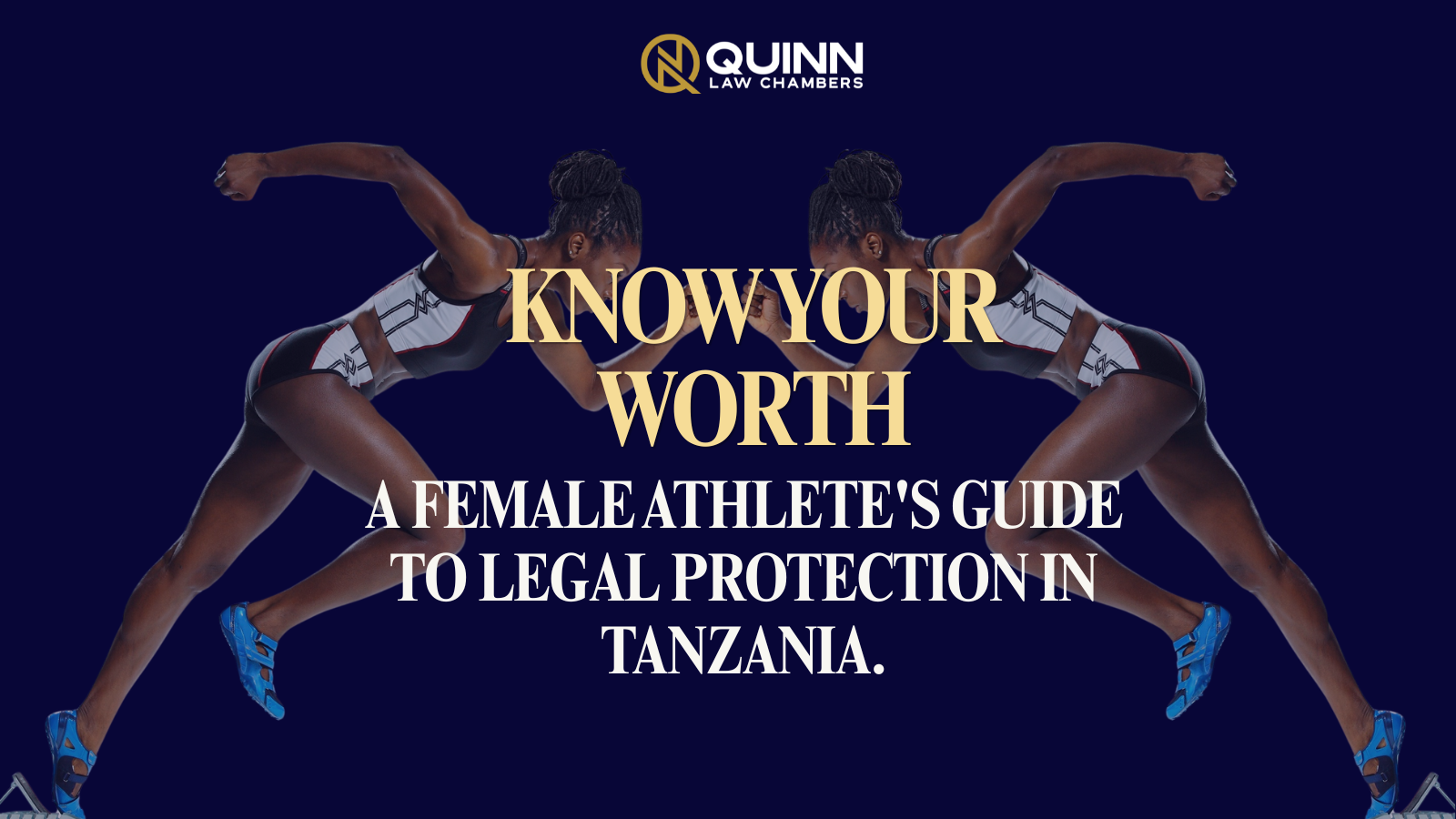
Know Your Worth: A Female Athlete’s Guide To Legal Protection In Tanzania.
Women’s sport in Tanzania is growing fast, with more leagues, more sponsorship interest, and more athletes turning professional. But the legal framework hasn’t always kept pace with that growth, and female athletes often face contract and workplace issues that their male counterparts don’t. Here’s what matters.
1. Equal treatment in contracts is a right, not a courtesy
Section 7(4) of the Employment and Labour Relations Act [Cap. 366 R.E. 2019] prohibits discrimination in the workplace on grounds including sex, gender, pregnancy, marital status, and family responsibility, and that protection extends to athletes employed under sporting contracts. In practice, this means:
- Pay, bonuses, and benefits should be based on role, performance, and level, not gender
- Contract terms (duration, termination conditions, disciplinary process) should mirror what’s offered in equivalent men’s competitions at the same club or federation
- Any clause that treats a female athlete’s employment as conditional on marital status, pregnancy, or family circumstances is legally vulnerable and worth challenging
If a female athlete is offered materially worse terms than a male athlete in a comparable position, that’s not just unfair; it may be an actionable discrimination claim.
2. Maternity and pregnancy protections apply to athletes too
Section 33 of the Employment and Labour Relations Act entitles a female employee to 84 days of paid maternity leave (100 days for multiple births), with additional protected leave where a baby is born prematurely. Section 36 goes further: a failure to let an employee return to work after maternity leave is treated as a termination, and under the 2025 amendments, dismissals found to be based on discrimination or harassment can now attract compensation of 12 to 24 months’ remuneration. Sporting contracts sometimes try to contract around this with clauses that suspend or terminate an athlete’s contract if she becomes pregnant. These clauses are legally risky for the club, and athletes should know they don’t have to accept them as standard. Questions to ask before signing:
- Does the contract specify what happens to pay and standing during pregnancy and maternity leave?
- Is there a guaranteed return-to-play path, or does the club reserve unilateral discretion over whether you’re re-selected?
- Are medical and insurance benefits maintained during leave?
3. Image rights and sponsorship, a growing but uneven space
Sponsorship interest in female athletes is increasing, but contracts don’t always reflect that value. Female athletes should check the same image rights terms as male athletes are advised to check exclusivity, personal endorsement approval, and what happens to sponsorship income if transferred, but should also watch for:
- Sponsorship clauses that undervalue image rights relative to male peers in the same federation
- Marketing obligations (appearances, content, media days) that aren’t matched by corresponding pay
4. Safeguarding and harassment protections
Federations and clubs have a legal and duty-of-care obligation to provide safe training and competition environments, free from harassment or abuse, including from coaches, officials, and teammates. If your federation or club doesn’t have a clear, accessible reporting mechanism for harassment or abuse, that’s a governance gap worth raising, and in serious cases, one that can support a legal claim separate from your employment contract.
5. Access and resourcing disputes
Unequal access to facilities, medical support, travel budgets, or competition opportunities compared to men’s teams isn’t automatically illegal, but where it reflects the kind of differential treatment employment law prohibits rather than a genuine operational reason, it can form the basis of a formal complaint to the federation or, in employment contexts, a labour dispute.
A quick checklist for female athletes before signing
- Are your pay and bonus terms comparable to equivalent contracts at the same level?
- Does the contract address pregnancy and maternity leave clearly, without penalty clauses?
- Are your image rights and sponsorship terms fair and clearly defined?
- Is there a real, accessible safeguarding and harassment reporting process?
- Has a lawyer reviewed the contract for discriminatory terms, not just an agent?
Why this matters now
As more Tanzanian federations professionalise women’s leagues and sponsorship money follow, contracts are being drafted quickly, sometimes by adapting men’s templates without adjusting for these issues. Getting terms right now, while the space is still forming, sets the standard for the athletes who come after.